

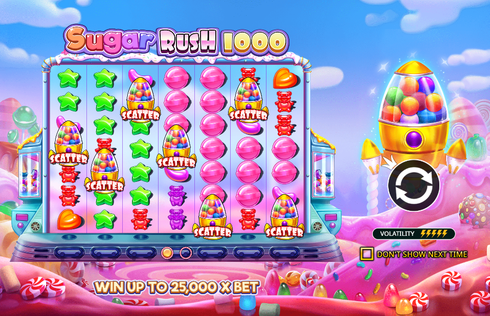





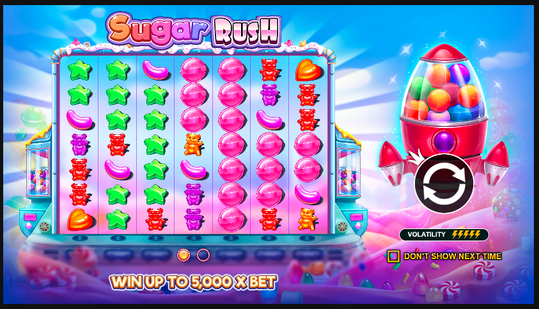
background

Sugar Rush Reviews for Players in Poland

Short and to the point: how to set the bet, understand RTP, and play calmly on mobile or PC in Poland – for adults only.

Sugar Rush
Sugar Rush

Sugar Rush RTP in Practice Before the Session

Imagine you have a free evening and want to play “just a few spins,” yet you don’t want to guess whether the game is rather calm or prone to dramatic swings. In such cases, the fastest solution is to look at the parameters—not to predict outcomes, but to match your session style. In 2026, most people play in short sessions on mobile, making the ability to translate numbers into decisions more important than mere curiosity.

The return rate (often abbreviated as RTP) indicates how the game is designed over the long term, but it says nothing about what happens in your current session. This is the distinction most players confuse. Volatility, on the other hand, hints at whether gameplay delivers smaller wins more frequently or fewer, but larger, hits. Once you grasp this, it’s easier to choose a budget and pace—rather than chasing losses by increasing bets after an initial losing streak.

The practical approach is straightforward: determine your session budget, divide it by the number of spins, and only then choose the bet size. If you play quickly, count spins carefully, as 10 minutes can easily turn into 150 clicks—even without autospins. If you play more slowly, you gain more time for breaks and can more easily recognize when you begin making impulsive decisions. On platforms available in Poland for adult users, it’s advisable to set time and deposit limits right from the start—not to restrict yourself, but to avoid battling impulses mid-session.

All promotional incentive structure is clearly stated in writing and/or via electronic means in an easily understood manner. All codes are accompanied by an explanation of what the code is for, who is eligible to use the code, and how it should be used. As such, players are less likely to be confused about what is required of them in order to receive a reward and how the reward will be applied after receiving it. The promotional incentives provided to participants provide them with time to become familiar with the gaming system's mechanics, their interface, and progress, before deciding how deeply they wish to become involved with this platform. Therefore, players are encouraged to participate in an informed manner, rather than being pressured or tempted to act quickly.

reviews image 1
Sugar Rush

Top casinos for playing Sugar Rush — current list

ALF Casino
ALF Casino
Mafia Casino
Mafia Casino
LeoVegas
LeoVegas
Sugar Rush Betway
SG Casino
Sugar Rush Betano
Retro Bet
Sugar Rush

What Sugar Rush Reviews Bring in 2026

If you play even a little, you know the scenario: you read reviews, and half of them sound as though someone pasted the same text in five places. Imagine you're choosing a game for the weekend, but you want a genuine answer to the question: “Will it be enjoyable on mobile, and is it easy to stay in control?”. In 2026, reviews are only helpful when they describe player behavior and interface, not just buzzwords.

Good reviews separate two things: slot experience and platform experience. The slot may have excellent pacing, while the platform may feature an average limits panel—or vice versa: the platform provides great control tools and support, yet the game simply doesn’t match your pace. If a review lacks specifics about bet settings, spin speed, breaks, and mobile-screen comfort, in practice you get nothing beyond the author’s emotion.

Look for descriptions that explain “what the player does,” not “what you should feel.” Does anyone mention playing in blocks? Does the author write about taking a break after 15 minutes because the pace is captivating? Do they mention autospins, reminders, and limits? These may seem minor, yet they build a safe session. The best review is one that helps you craft your own plan: budget, time, number of spins, and exit timing—without chasing results.

reviews image 2
Sugar Rush

Sugar Rush Mechanics and Features Without Chaos

Imagine launching the game for the first time and immediately seeing many colors, animations, and buttons. It’s easy to click “start” and only later wonder about your settings. Better to do the opposite: take two calm steps before the first spin, and only then start playing. In practice, this saves money, time, and nerves, because you avoid learning through emotionally driven mistakes.

First, set your bet and pace. Then check where the limits and break options are located in the panel. Only at the end do you adjust extras like sound or animation speed. This is a simple hierarchy: financial and control decisions go first, aesthetics last. If you’re playing in Poland, remember it's entertainment for adults—mature sessions start with settings, not “just one more.”

Bet, Pace, and Autospins in One Plan

Assume you have 20 minutes and want a short yet satisfying session. Players commonly err by setting the bet, then enabling fast pace and autospins, causing the budget to vanish before they’ve had time to think. Better to approach this like driving a car—sometimes it’s enough to lift your foot off the accelerator rather than adding more power.

A good plan looks like this: choose one bet for the entire block and set the pace so you can notice what's happening. If you use autospins, set a short sequence and pause for 10 seconds afterward. Ask yourself one question: “Am I still playing mindfully?” If you feel you’re clicking without thinking, return to manual spins or take a break. Many try to “fix” a losing streak by raising the bet, but this typically only accelerates the emotional spiral.

In 2026, mobile play is naturally fast, so the crucial factor is the brake—the brake being time limits, breaks, and a constant bet. With a brake in place, you can enjoy varying the pace without fear that the session will spiral out of control.

Symbols, Combinations, and Emotional Ups and Downs

Imagine playing for several minutes and getting small payouts, then suddenly hitting a stronger moment and immediately wanting to “stay longer.” This is normal—the game is designed to spark such moments. The problem begins when, after just one stronger win, you change your whole plan: extend the session, speed up the pace, and increase stakes.

It’s best to treat such moments as signals for self-check, not for taking more risk. If emotions rise, take a brief pause, check your budget, and return to your rhythm. Many think “things will surely improve now,” but this is a narrative in your head, not a game rule. Your rule should be your session plan—not a gut feeling.

A good practice is also a simple internal journal: what made me change my pace? Was it boredom, frustration, or euphoria? When you can name the emotion, it’s easier to let go. And when you let go, the game returns to being entertainment.

Demo Mode and Practice Without Risk

Imagine you want to “feel” the game’s rhythm, but don’t want to pay for learning settings. The demo mode lets you calmly check where options are, how pace changes, and whether you like this style at all. It’s also a great place to test your own habits: after three weaker rounds, do you speed up, or stick to the plan?

The best training is training under conditions similar to a real session. Set a time limit, complete a block of spins, take a break, then another block. If even in demo mode you notice the pace drawing you in, set stricter boundaries for a real session. This doesn’t limit fun—it stabilizes it.

Sound, Animations, and Comfort on Mobile

Imagine playing in a public place, and your phone suddenly plays louder than intended. Or animations are so fast you feel out of control. These may seem minor, but they influence decisions in practice: when you feel chaos, impulsive clicks are more likely.

Set sound and animation speed so you feel calm. On mobile, disable notifications and enable focus mode if you know you’re easily distracted. Comfort isn’t luxury—it’s a control tool. When you’re comfortable, you rush less. When you rush less, you chase wins less often.

Sugar Rush

Deposits, Withdrawals, and Limits on Platforms in Poland

Imagine you have an ideal plan: short session, one deposit, and done. Then a thought appears: “I’ll add a bit more, since it’s not going well today.” It’s precisely at such moments that setting limits beforehand wins—before even beginning to play. In Poland, platform access depends on the operator, but best practices are universal: one budget decision, one deposit per session, clear time and break rules.

Instead of treating payments like a “rescue button,” consider them part of the plan. When your budget is gone, the session ends—no negotiations. This is the simplest way to keep entertainment within bounds and avoid spiraling into chasing losses. In 2026, a transparent transaction panel and limits are just as important as the game itself, as they safeguard your pace when emotions rise.

Area

What to Set Before Playing

Why Do This?

Quick Tip

Session Budget

Amount for one evening

Prevents impulsive top-ups

Stick to one deposit

Time Limit

Session duration and reminders

Protects against “just one more moment”

Play in blocks

Loss Threshold

The limit beyond which you stop

Cuts off chase of losses

Save it in your notes

Profile Verification

Account data and settings

Simplifies payouts and enhances security

Do it ‘calmly’

Transaction History

Review transactions and sessions

Reveals habits and patterns

Check after the session

One Deposit per Session, Instead of Continuous Top-Ups

Imagine you're playing in the evening, you lose a few rounds, and your hand automatically reaches for the next deposit. This is the classic moment when a session stops being entertainment and starts becoming an attempt to 'fix' your mood. The most effective rule is simple: one deposit per session, no exceptions.

If you want to play longer, plan it beforehand—not during. Set your budget, establish a time limit, and only then deposit the amount. This way, you won’t have to make financial decisions while emotionally charged. Many people think control is about 'willpower,' but in practice, control is about systems: limits, plans, and breaks. A system wins over impulse more often than a promise of 'next time.'

Payouts and Verification Without Nervous Refreshing

Suppose you've requested a payout and after an hour you start feeling anxious because you haven’t seen any result. Stress builds, and instead of resting after the session, you keep refreshing your account dashboard. The first step is always the same: check the operation status and completeness of your profile data. Often, additional steps arise from security requirements or specific payment method procedures—not from 'issues.'

It’s best to handle your profile earlier—on a day when you're not playing and emotions are calm. That way, when payout time comes, you go through the process peacefully. If confirmation is requested, treat it as a standard procedure, not an obstacle. And if you feel tension rising, take a break from gaming and return to checking status later. Entertainment should calm, not excite.

Customer Support: How to Describe Your Issue Without Chaos

Imagine something is unclear and you send several messages at once, each about a different thing. Then the conversation gets extended because the support agent must piece together your story. The best approach is one clear message: what happened, when, what status you’re seeing, and what you need.

A practical example: mention the payment method, approximate operation time, and the message from your dashboard. No emotions, no accusations—just facts. This speeds up the response and reduces stress. It’s also worth remembering to take breaks—if you contact support after a long session, you’re more likely to sound agitated. Better to wait 10 minutes, cool down, and only then describe the problem.
reviews image 3

Sugar Rush Casino Bonus Codes Activation Process

Sugar Rush Casino Bonus Codes Conditions

Session Strategy: Calmness, Breaks, and Responsible Play

Imagine starting 'just for a moment' and suddenly half an hour passes, and you don’t even know when. This doesn’t have to be a problem if you have a plan. The issue arises when there’s no plan, and every decision is made spontaneously, under emotional influence. In 2026, when games are accessible on mobile at any free moment, creating routines matters more than finding a 'trick.'

A routine consists of three things: budget, time, and breaks. If you set these, gaming can be dynamic, yet you remain the driver—not a passenger. One more thing: you don’t need to 'win the session' for it to be good. A good session is one where you feel calm afterwards, not the urge for revenge.

Session Planning in Three Numbers: Amount, Time, Number of Spins

Suppose you have 30 minutes and a fixed amount for the evening. Instead of diving in blindly, do simple math: how many spins can you realistically make at your current pace? Players often calculate 'perfectly'—then their pace picks up, and the plan falls apart.

Set the number of spins with a buffer, choose one stake, and stick with it throughout the block. After the block, take a break, and only then decide whether to do another one. This works because it shifts decision-making from emotion to structure. If halfway through the block you feel temptation to change your stake, it’s a signal that your plan was too aggressive or your pace too fast. In such a case, it’s better to slow down, not escalate.

When to Slow Down and When to End a Session

Imagine that after a few losing rounds, you feel irritation and start clicking faster to 'make something happen.' This is the moment when the game takes over. The best response is simple: slow down your pace, return to manual spins, and take a short pause after a few rounds.

There are also moments when slowing down isn’t enough. If you catch yourself thinking 'I’ll recover it,' if you want to immediately change settings, if you stop managing time—you end the session. Ending a session is not failure, but a tool. Many players lose not because the game is 'hard,' but because they don’t stop when they should. Ending at the right moment is the most mature decision at slot machines.

Timeout and Self-Exclusion as Real Safeguards

Suppose you're having a bad day: stress, fatigue, little patience. In such a state, it’s easy to see gaming as a way to vent, making decisions more impulsive. Timeout acts like a pause—you cut off access for a set time and don’t have to fight the impulse right here and now.

Self-exclusion is an option for people who notice a repeated pattern of crossing their own limits. It’s not a 'punishment,' but a protective tool. If you feel your limits aren’t enough, choose a stricter solution. Responsible play isn’t a promise that 'next time will be better,' but a decision that works even when emotions run high.

Mobile Gaming: Focus, Notifications, and Micro-Breaks

Imagine playing on your phone and a notification popping up constantly, with spins happening between one notification and the next. This is a direct path to clicking without reflection. Enable focus mode, silence notifications, and choose a moment when you don’t need to interrupt every minute.

The block technique also helps: 10–20 spins, break, quick check of budget and time. If you notice your pace increasing, return to a slower rhythm. On mobile, it’s not about playing 'as fast as possible,' but playing 'as mindfully as possible.' Mindfulness comes through breaks, and breaks create space for better decisions.

How to Evaluate Reviews and Test the Game Yourself

Imagine reading reviews and feeling like everyone describes a different game. Some praise speed, others complain about volatility, and you just want to know if it fits your style. The best solution is to combine two sources: reviews for context and your own test in a controlled session.

Don’t trust texts that don’t discuss practice. Look for insights like: 'the game is convenient on mobile,' 'easy to set the pace,' 'breaks are crucial because it’s addictive.' Then test it yourself in a short session, with time and budget limits. In 2026, these quick, controlled tests provide the best answers because they consider your habits—not just someone else’s emotions.

Pre-First Session Checklist for Poland

Suppose you want to play for the first time and avoid the 'click, then think' trap. Make a five-step checklist: choose your budget, set a time limit, decide on the number of spins, pick one stake, and plan a break. Only then start.

During play, stick to one rhythm and avoid changing several things at once. If you want to change the stake, slow down the pace. If you want to speed up, don’t increase the stake. After the session, spend a minute reviewing: did the time limit work? Did you take breaks? When did the temptation to chase losses appear? Such brief reviews build better habits faster than reading another 'magic' tip.

FAQ

How to choose a stake so you don’t blow your budget?

Suppose you have a fixed amount for the evening and want it to last for a reasonable number of spins. First, define your session budget, then estimate your pace and calculate how many spins you’ll realistically make within the chosen time. Only then pick a stake that prevents volatile mood swings. A solid rule: one stake per block, break, assess mood, and only then possibly continue with another block.

What does RTP mean, and does it matter in a short session?

Imagine you see the RTP parameter and think it’s a 'guarantee' of your result tonight. This is the most common misunderstanding. RTP describes the game’s design over the long term, and a single session can play out very differently—sometimes calmly, sometimes with strong volatility. In a short session, what matters more is how YOU set pace and limits—not the number in the description. Treat it as a hint about the game’s character, not a promise, and always plan your budget and time before you start.

How to set time and deposit limits to stay in control?

Suppose you start 'just for a moment' and an hour passes because the game pulled you in. Limits exist to prevent this, so set them before your first spin: session time limit, reminders every 10–15 minutes, and deposit limits that block top-ups. Best practice is to add a loss threshold beyond which you stop without negotiation. If you know you’re prone to playing while emotional, consider a temporary timeout as a tool—not a 'penalty.'

Why chasing losses is unwise and how to stop it

Imagine after a few losing rounds you feel you 'must' recover because otherwise the session is wasted. This is the moment when emotion, not your plan, takes over. The simplest interruption is a break: finish the block, put the phone away, return only after a few minutes when tension drops. A pre-set strict loss threshold also helps, as it leaves no room for negotiation. If chasing losses happens regularly, choose a longer break and stricter limits—it’s a signal you need more stable boundaries.

Are auto spins a good idea on mobile?

Imagine turning on auto spins while replying to messages. Soon, you won’t remember what’s happening, and the pace takes over. Auto spins can be convenient, but on mobile they require greater discipline: short series, breaks after each series, and quick checks of budget and time. If you notice playing 'on autopilot,' switch back to manual spins—this naturally slows you down and provides more control.

What to do if a payout takes longer than expected?

Imagine refreshing the status every few minutes, increasing stress even though nothing real is changing. First, check the operation status and history in your dashboard, then ensure your profile data is complete and current—this is a common cause of additional steps. Processing time depends on the method and security protocols, so give it space instead of escalating tension. If you need support, contact customer service with a single, clear message: method, approximate request time, visible status in your account, and whether additional confirmation is needed.

How to read game reviews without falling for marketing?

Imagine landing on a review full of praise but lacking specifics. Such text won’t help practically—it doesn’t describe how the game performs on mobile, how to adjust pace, or how to maintain limits. Look for reviews describing player actions: session planning, breaks, budget control, reaction to losing streaks, and interface comfort. Best is to combine this with your own short, controlled test—then you’ll know whether the game fits your rhythm, not just someone else’s emotion.

Play Now
🇬🇧 English