

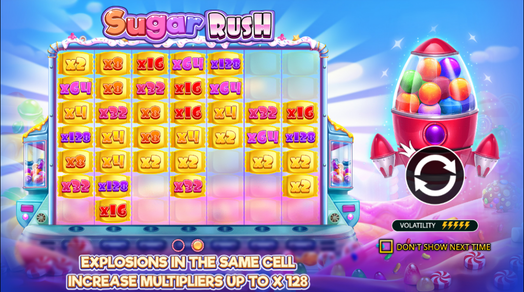






Sugar Rush App for Phone in Poland
Practical installation plan for Sugar Rush and limits: quick start, account security, and breaks for adults in Poland.
How to Approach Sugar Rush Apk in Poland
Imagine this scenario: you want to play “right now,” your phone is at hand, and your search engine shows countless results with installation files. At that very moment, it’s easiest to make a shortcut that later costs nerves—because a file from an uncertain source may request odd permissions or behave unstably. That is why, in 2026, the most important approach is: less haste, more control.
Start by distinguishing two things: installing the game on your device and accessing the platform in Poland in accordance with rules and age restrictions for adults. This is not an academic observation—it's practice. When you know you're playing as an adult user with limits enabled, it’s easier to keep entertainment in check, rather than treating installation as “click and done.”
If you decide to install from an APK file, treat it as a technical task, not an adventure. Check whether your phone is asking for suspicious permissions, assess whether your system is up-to-date, and prepare an update plan. The greatest problem with installation files isn’t that “they’re always bad,” but rather that it’s difficult to evaluate their origin without a procedure. A procedure is simply a set of steps: source, permissions, updates, and testing in a short session.
In practice, it’s best to start with official app stores on your phone. Yet if the situation calls for an installer, don’t do it blindly. Before enabling installation from unknown sources, ask yourself: why am I doing this, when the goal is safe entertainment? This question acts as a brake—especially when emotions already urge “just get it done quickly.”
All promotional incentive structure is clearly stated in writing and/or via electronic means in an easily understood manner. All codes are accompanied by an explanation of what the code is for, who is eligible to use the code, and how it should be used. As such, players are less likely to be confused about what is required of them in order to receive a reward and how the reward will be applied after receiving it. The promotional incentives provided to participants provide them with time to become familiar with the gaming system's mechanics, their interface, and progress, before deciding how deeply they wish to become involved with this platform. Therefore, players are encouraged to participate in an informed manner, rather than being pressured or tempted to act quickly.
What Makes the Sugar Rush App Stand Out in Daily Play
If you play on mobile, you know this scenario: five minutes in a queue, ten minutes before bed, a short break between tasks. Imagine that, in these brief windows, you want peace of mind—not technical problems: login issues, hangs, unclear messages. That's precisely why the mobile version in 2026 wins on convenience, but only if set up properly.
The biggest advantage of a phone app is the speed of entry and exit. You can start a short session and end it just as quickly if time limits and reminders are set. This matters because mobility shortens the distance between impulse and click. Good practice is straightforward: before you start, set a session timer, choose a stake, and after finishing, consciously close the game rather than leaving it “open in your mind.”
In Poland, using such solutions should be for adults and within applicable rules. No grand declarations are needed—just behavior: budget control, breaks, protective tools. In 2026, this is the standard of responsible entertainment, not an add-on “for the cautious.”
It’s also worth considering daily practice. A phone is a device bombarded with notifications, energy-saving modes, and background apps. If you don’t set up your environment, gaming will interfere with messages, and it’ll be easier to fall into autopilot. And autopilot in games is poor advice—it acts quickly, but doesn’t consider limits.
Install on Android and iOS Without Chaos
Imagine installing a game late in the evening, while your phone constantly suggests other options, permission pop-ups appear, and everything happens too quickly. It's easy then to click “allow” on something you didn’t want, or to skip an important step that later blocks functionality. Better to do it calmly—once, and thoroughly.
Start by preparing your phone: update your OS, ensure sufficient storage space, and have a stable connection. Then, address privacy: screen lock, hidden notification content on the lock screen, sensible settings for background apps. These are small details, but in 2026, they determine whether installation and the first session are smooth.
If you use Android, you'll most often encounter a message about installing from an external source. If you use iOS, you usually stay within official installation methods and system settings. Regardless of the OS, the rule is identical: the fewer shortcuts and improvisations, the fewer problems later.
Where to Get the Installer and How to Verify the Source
Imagine this situation: a friend sends you a file and says “it works, install it.” That sounds convenient, but without verification, it’s risky—you don’t know exactly what you’re installing or what permissions the app will receive. Safer is sticking to official app stores, and if you must use an installer, treat it like a file that requires checking.
A practical checklist is simple. First: don’t install files that request access to things unrelated to the game (e.g., contacts or SMS, unless there’s a clear reason). Second: check whether the file forces additional “managers” or strange add-ons. Third: after installation, quickly review permission settings in your system and disable anything unnecessary for comfortable operation.
If something looks suspicious, don’t negotiate with it. Delete the file, revoke permissions, and return to a safer installation method. This is a decision that saves time—even if it seems “less convenient” for a moment.
Phone Settings That Affect Installation
Usually, players blame the game when something doesn’t work, but the culprit is often the phone. Imagine installation starts, yet the app later closes or缩 (shrinks)—this is often due to battery-saving modes, insufficient storage, or aggressive background process clearing. First, organize your environment, then evaluate the app.
Check your device storage and close unnecessary programs. Disable “optimizations” during installation that restrict background app behavior. If your phone has a data-saving mode, ensure it isn’t throttling downloads. In 2026, systems can be “overly helpful”—and that’s exactly what ruins first impressions.
Good practice is also to install and test under calm conditions—not on a bus, not in a hurry, not between notifications. Conduct a brief trial, check whether login works stably and whether limit settings are accessible. Only then enter a longer session.
Updates, Agreements, and Account Security
Imagine everything works, then after a week errors appear because the app is outdated. Updates in 2026 are not just about features—they’re about stability and security. Therefore, verify that system updates are enabled, and after a major OS update, run a short test session before playing longer.
Consents and permissions should be viewed as controllable settings. If something isn’t needed, disable it. And if an app suddenly requests new, unusual permissions—pause and assess whether it makes sense. One minute of reflection costs less than a week of troubleshooting.
What to Do if Installation Fails
Imagine installation stops halfway, and you tap retry five times in a row. That usually doesn’t help. A technical approach works better: restart your phone, check storage space, verify connection, and only then attempt again.
If the issue persists, check your system security settings and whether they block installation. Pay attention to error messages—they often explicitly state what’s missing (space, permission, connection). Proceed step by step: one change, one attempt, one observation.
Payments, Withdrawals, and Limits in Practice
Imagine this: you want to play “just for a moment,” but before starting, you’re confronted with funding your account—and suddenly lose your calm because everything happens too quickly. That’s normal—financial operations raise tension. That’s why, in 2026, predictability is key: one method, clear limits, calm confirmations.
In Poland, adults using such platforms typically follow verification procedures and account data consistency. It's not about “red tape,” but about security. If you keep your data in order and avoid mixing methods in haste, you’ll face fewer problems at worst-case moments—when you want to end a session quickly or withdraw funds.
Start with limits, not emotions. Set a session budget, establish a time limit, and only then consider depositing. Separate tasks: first, handle account matters; second, play. This way, you won’t make financial decisions mid-emotion.
Region | What to Set Up Before Playing | Why Do This | Typical Mistake |
Session Budget | entertainment amount + daily cap | expense control without stress | adding “just a bit more” |
Playing Time | timer + break reminders | stop when time is up, not when results come | stretching sessions late at night |
Payment Method | one, proven option | fewer errors and less stress | switching methods in a hurry |
Payout | consistent data and patience | simpler handling and fewer blocks | multiple attempts in a row |
Security | screen lock and logout | account protection on the phone | leaving the app open |
How to Set a Budget for a Single Session
Usually, a person thinks ‘I have this under control’ until an impulse arises. Imagine playing after a hard day, wanting to decompress — at that moment, the budget in your head becomes flexible. Therefore, the budget must be specific and set in advance, preferably as a per-session amount, not ‘for the whole day’.
Dividing time into small blocks works well. You set a limit for one session, finish after the time elapses, take a break, and only then possibly return. This keeps recreation in check and reduces the risk of playing while emotionally driven. If you feel pressure to ‘make it up’, that’s a signal it’s time for a break, not an exception to the limit.
The budget should be realistic — not maximum, not ‘just in case’. Realistic means an amount that doesn’t affect daily expenses. In 2026, this is the simplest definition of responsible entertainment.
Payment Methods and Confirmed Transactions Without Stress
Imagine making a deposit in a rush; your phone loses the confirmation window, and you start clicking nervously. That’s a straightforward recipe for error. Better to sit down for a moment, check your connection, ensure notifications aren’t hidden, and only then perform the operation.
Stick to one method at the start. Mixing options during a session increases variables and makes control harder. If something doesn’t work, the culprit is usually the phone: power-saving modes, system locks, or weak network. The solution lies not in rushing, but in orderly setup.
Most important: separate deposits from gameplay. First, perform the transaction, close the topic, and only then start your session. That way, you avoid making financial decisions ‘in the heat of the moment’.
Fund Payouts and Typical Verification Steps
Stress often arises when a payout doesn’t happen immediately. Imagine seeing an extra step and instantly assuming there’s an issue. Often, it’s standard confirmation and depends on the method used, so staying calm and avoiding multiple repeated attempts is key.
Good practice looks like this: one correct attempt, then checking messages, verifying data, and only then proceeding further. If something drags on, gather concrete details: what you clicked, which step got stuck, whether it recurs on a different network. Such a description speeds up support, eliminating guesswork.
In 2026, payouts are smoothest when account data remains consistent and you don’t change settings mid-process. Changing ‘just in case it helps’ usually only prolongs the path to resolution.

Controlled Gameplay: Tempo, Breaks, Protection
Imagine starting for “just a moment,” and half an hour later you can’t remember when you pressed start. This is classic mobile gaming — the phone is always at hand, and rounds go faster than you think. In 2026, the best way to maintain control is rhythm: short sessions, breaks, checkpoints, and a clear end.
Entertainment works well when you have boundaries independent of outcomes. End after time, not after a “feeling.” Budget as a per-session amount, not “how much more I can spend.” If tension rises, a break is a tool, not a failure. In Poland, for adults, this is the simplest form of responsible gambling.
Also attend to your environment. Mute notifications, set focus mode, and play only when you can concentrate, even if briefly. Chaos in the background increases random decisions, and random decisions are costly.
Session Plan for Adults
Imagine you have a plan, but halfway through you start bending it, thinking “not yet.” Then the plan stops working. Therefore, the session plan should be simple: time, budget, break. The fewer elements, the higher the chance you’ll keep your promise to yourself.
Set session duration and a timer. Choose a stake that doesn’t cause tension, and don’t change it under emotional influence. If you want to test, do it like an experiment: short block and clear limit. After the session, spend a minute reflecting: Was ending easy? Did you want to break limits? Was the game still entertainment?
If your answer starts to waver, shorten the session time next time. In 2026, shorter sessions almost always outperform marathons.
Timeout and Self-Exclusion Without Drama
Imagine telling yourself “last round” for the third time. This isn’t a moment for negotiation — it’s a moment for using a tool. A temporary break works like a reset: it cuts the impulse and creates space to return with a clear head.
Self-exclusion is for moments when you need a stronger barrier. There’s no shame in that. It’s a safety mechanism protecting against emotionally driven play. Most important is reacting early, upon noticing signs: rising stress, difficulty ending sessions, more frequent sessions than planned.
After a break, return with a plan, not emotion: shorter session, lower limit, more checkpoints. This is what practical responsible entertainment looks like.
How to Avoid Playing on Autopilot
Imagine playing in a public place, constantly getting messages, clicking without thinking to “just finish.” Autopilot kicks in when attention is divided. The simplest remedy is limiting stimuli: focus mode, muted notifications, short sessions.
Introduce checkpoints. Decide to pause every few minutes, check the time and budget, and ask yourself: “Is this still fun?” If not, end it. Checkpoints work better than sheer willpower, as they don’t rely on mood.
A ritual of ending also helps: stop, close the app, put the phone down. Without it, it’s easy to return “for a moment,” turning the day into a continuous string of mini-sessions.
Support and Reporting: How to Be Specific
Imagine something’s broken and you write “help, I can’t play.” On the other side, no one sees your screen, so without details, it’s just back-and-forth questions. Better to provide specifics right away: phone model, OS version, what exactly you did, and precisely where the problem occurs.
Work systematically. One attempt, one change, one observation. If it’s about login, check network and notification settings. If it’s about fluidity, check memory and power-saving. If it’s about account operations, avoid rapid repeated attempts.
In 2026, the best support is specificity. Specifics shorten resolution time and reduce stress — and that’s what matters when gaming should be fun, not a source of frustration.
Most Common Mistakes and How to Avoid Them
Imagine doing everything “as usual,” then wondering why sessions lengthen and you lose control. Most common mistakes are trivial: no limits, playing in haste, installing from an untrusted source, mixing payment methods, ignoring breaks. In 2026, these remain the main cause of problems — not because gamblers are reckless, but because smartphones make shortcuts easy.
The first mistake is confusing convenience with safety. Convenience says “do it fast,” safety says “do it right, once.” The second mistake is playing without a plan because it seems boring. Yet a plan doesn’t need to be exciting — it’s there to protect entertainment from turning into tension.
The third mistake is having no endpoint. Without a clear time boundary, outcomes begin dictating decisions. And once outcomes dictate decisions, autopilot is inevitable. Therefore, set a timer and stick to it as a rule, not a suggestion.
Short Pre-Start Checklist
Imagine wanting to start immediately, but giving yourself a minute to prepare. That minute often saves hours of frustration. Check: do you have time limit set? Is your session budget clear? Will notifications interfere? Does your phone have stable connectivity?
Next, ensure your account is secure: screen lock, sensible app permissions, no suspicious background add-ons. Finally, run a small test: short session, settings check, calm ending. If everything works, only then proceed to normal rhythm.
This is a simple habit that in 2026 makes the biggest difference — not because “you have to,” but because it works in practice.
FAQ
How to install the Sugar Rush game safely?
Safest is using the official app store on your phone and avoiding accidental downloads from untrusted sources. If using an installer, review permissions after installation, disable unnecessary features, and run a short test session before longer play. Also, the “one change at a time” rule helps — when something breaks, don’t panic-click; instead, systematically check phone memory, connection, and power-saving settings.
What to do if the phone blocks external file installation?
Stop and read the system message — it usually clearly states what is blocked and why. Check security settings, storage space, and whether your system requires confirmation in a specific location. If the issue persists, restart the phone and try again only after organizing your settings — frantic repetition rarely speeds up the process and instead increases the risk of error.
How to set limits to avoid playing too long?
Set two core restrictions: session time limit and entertainment budget, plus a break reminder. Best if session ending is triggered by time, not outcome — this prevents emotions from dictating decisions. If you know you tend toward “just one more round,” shorten the timer and add a checkpoint halfway through, so breaks become automatic steps, not emotional choices.
Why does mobile gaming more often lead to autopilot?
Because the phone is always at hand, rounds start in seconds, often amid high-stimulus environments. With notifications, calls, and poor focus, decisions become reflexive, and sessions easily lengthen. Focus mode, notification silencing, and short sessions with breaks help — better to play briefly but mindfully than at length without control.
What to do after a long session to avoid returning immediately?
Best to consciously end gameplay: close the app, put down the phone, and take a short break doing something neutral — like drinking water or walking around your home. If the urge to return is strong, set a timeout or lower limits for the next session. This simple approach prevents entertainment from turning into a constant “just a moment” habit.
How to recognize it’s time for a break or access block?
Signs are usually clear: rising tension, difficulty ending a session, thoughts of “making it up,” or playing more often than planned. In such a case, a temporary break acts as a reset, while a stronger block helps when you need a firm barrier. Most important is reacting early — upon noticing signs — not once the situation becomes draining.
How best to describe an issue to resolve it faster?
Provide specifics: phone model, OS version, network used, and the precise moment the error appears. Describe steps in order, without emotional shortcuts, and avoid repeated attempts — one try, one change, one observation is the fastest path to diagnosis. Such a description allows support to act immediately, rather than guess.